


Sections
Start — Introduction — Research Methods — Development of the Program — Participants and Program Components — Program Effects — Discussion and Conclusion — References
Program Effects
Researchers used several methods to estimate the effects of BOGAP, including interviews, surveys, and arrest data obtained from law enforcement. The study found participants and program staff appreciated BOGAP and that their attitudes on key study outcomes generally remained stable over time. The study also found that individuals referred to the program rather than regular court processing experienced rearrest rates and risks similar to those in regular court processing, and, in some analyses, slightly lower. To more accurately account for differences in follow-up periods across participants, researchers examined not only whether rearrest occurred, but also the time participants remained rearrest-free after program exit.
Participant Attitudes
The research team measured participant attitudes and psychosocial outcomes across five survey waves, accounting for demographic characteristics and psychosocial factors. Bivariate (Kruskal-Wallis) and multivariate ordered logistic regression test results indicate that participant outcomes remained stable across survey waves, with no significant temporal changes.1 The team examined selected psychosocial characteristics theorized to be associated with participant attitudes and well-being. Higher levels of self-regulation and empathy among survey participants were associated with prosocial attitudes toward violence, conflict resolution, and employment. Generally, participants who entered the programming with higher levels of empathy and more ability to self-regulate their emotions tended to demonstrate a more negative attitude toward violence, a greater endorsement of constructive conflict resolution, and more positive employment attitudes. Social support within the program was associated with greater awareness of mental health resources among BOGAP participants.
The study measured ten survey constructs to assess attitudinal change following the completion of each phase of BOGAP. Of the ten survey constructs, the analysis focused on four outcomes: violence attitudes, conflict-resolution attitudes, employment attitudes, and mental health awareness. Bivariate tests assessed whether distributions of the various constructs differed across survey waves. None of the tests were statistically significant, indicating that levels of mental health awareness, empathy, future orientation, social support, violent attitudes, conflict resolution, neighborhood safety, self-regulation, and employment attitudes all remained in a prosocial direction over the study period.
Researchers investigated predictors of the four outcomes using a series of ordered logistic regression models. The models allowed the team to test whether attitudes changed over time and whether demographic or psychosocial characteristics predicted attitudes. Across all models, survey-wave indicators were not statistically significant, suggesting there were no meaningful changes between waves. The results were consistent with non-parametric tests, reinforcing the inference that attitudes remained relatively stable throughout the study period.
While time and cohort differences were largely absent, several psychosocial variables consistently predicted outcomes (Table 8). Participants reporting stronger self-regulation skills were more likely to endorse prosocial attitudes. Higher levels of self-regulation were associated with less support for violence, stronger support for conflict-resolution, and more positive employment attitudes. Participants reporting higher empathy were more likely to endorse prosocial behaviors and constructive problem-solving. Empathy was positively associated with conflict resolution and employment attitudes. Social support within the program network was associated with improved mental health awareness.
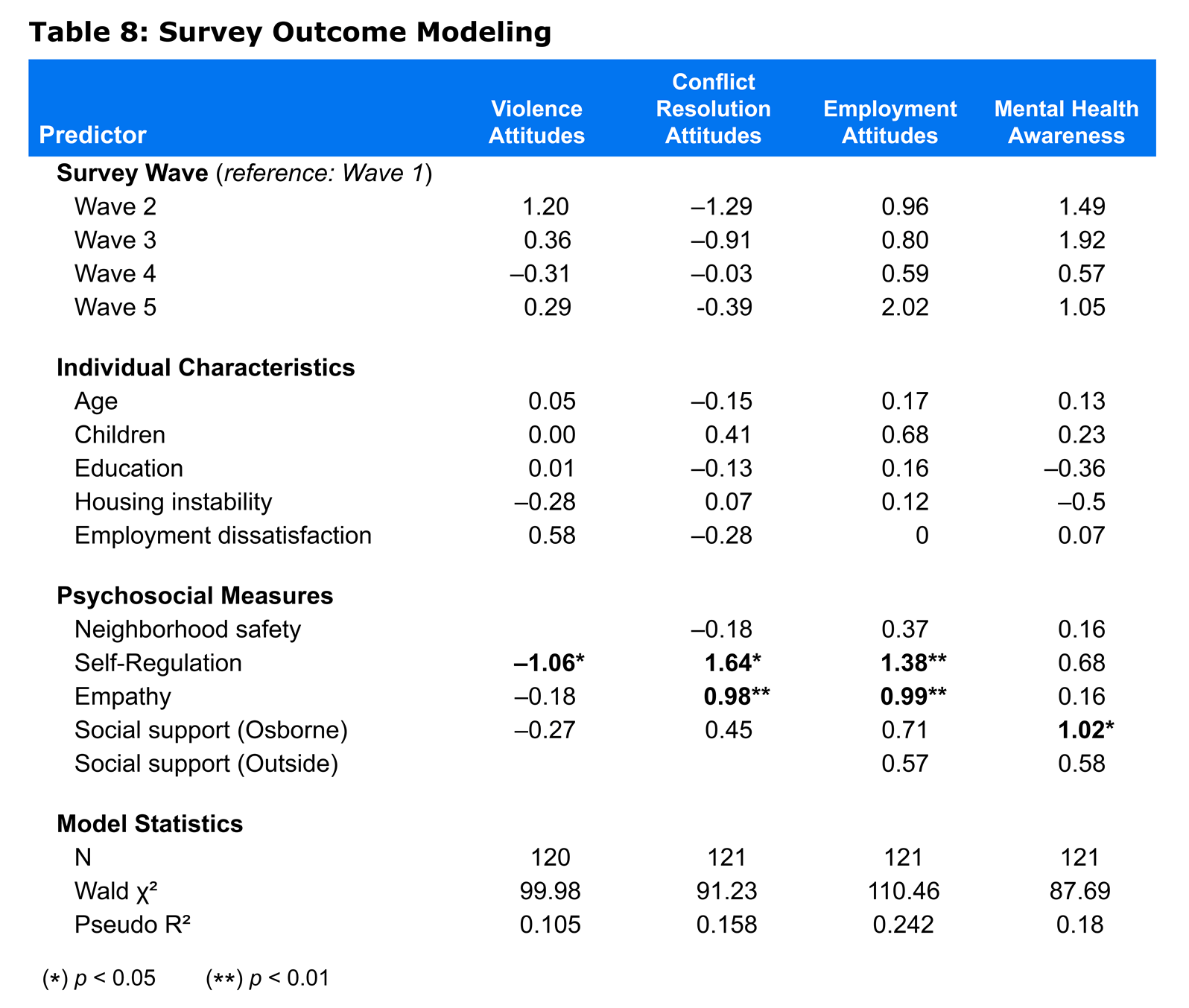
The explanatory power of the models ranged from 11 percent to 24 percent, as indicated by the Pseudo R² in each table. Participant attitudes generally remained stable over time, while individual psychosocial characteristics were the strongest predictors of outcomes. In particular, self-regulation, empathy, and social support appeared to play important roles in shaping attitudes related to violence, conflict resolution, employment, and mental health awareness. (For more details about each model, see Appendix I.)
The original study design included a plan to collect survey data from a matched comparison group of similar people, but the research team had to adapt to changes in BOGAP operations and case-processing modifications implemented by the Bronx DA. Researchers were unable to survey a comparison group. Instead, the research team added a question to participant interviews asking what their lives would have been like had they not been involved in BOGAP.
Participants generally believed that without the program, they would have continued to carry firearms. The experience with BOGAP prompted changes in their behaviors and life trajectories by altering how they thought about and approached their daily lives. Several participants described BOGAP as having an impact on their futures, helping them take a more positive path than they had previously imagined. The program helped them to become more open to others and more willing to resolve conflicts without violence. Participants further reported that BOGAP was a source of renewed self-efficacy and that, because of BOGAP, they began to trust their ability to change their circumstances and shape their futures in ways they had not felt capable of before.
Recidivism
Researchers used criminal justice records from New York State’s Division of Criminal Justice Services (DCJS) to measure post-program rearrests of BOGAP participants and compare them with arrests among a matched comparison pool of cases involving people with similar characteristics. The research team reviewed data for participants from the program’s first eight cohorts. Cohorts nine and ten were excluded from the analysis, as participants in those cohorts had not formally or officially exited the program before the final date when the study team could obtain arrest data from DCJS (i.e., January 2026).
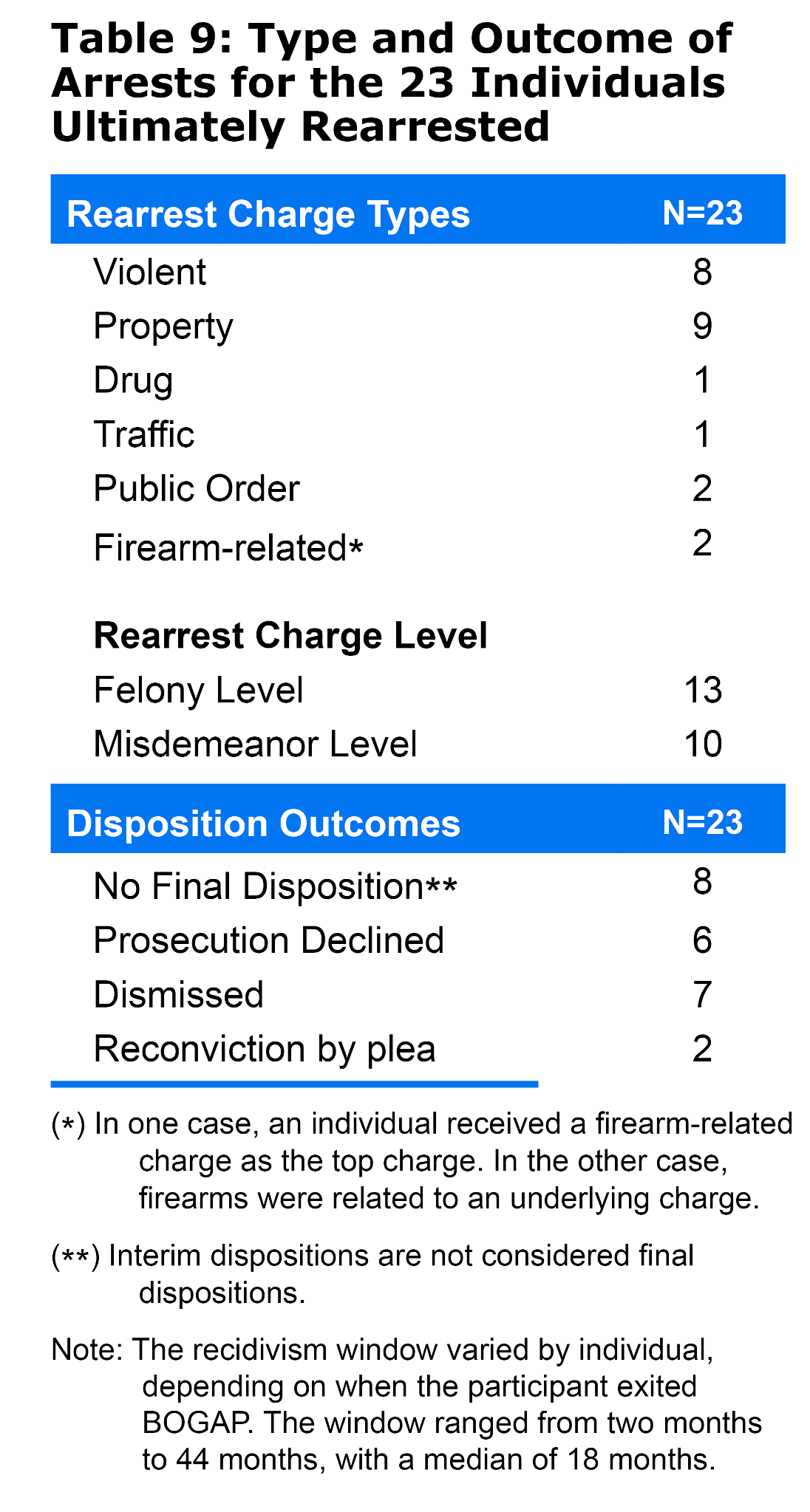
Researchers tracked arrests from the dates each participant exited the program (Table 9).2 Of 84 individuals in the first eight cohorts, 23 (27%) were arrested for some criminal charge after leaving BOGAP. Two of the 23 were arrested for firearm-related charges. More common rearrest charges were property crimes (9 participants) and various degrees of violent crime (8). Thirteen rearrests were felony-level charges, and seven were misdemeanors. More than half of the cases resulted in either dismissal (7) or a declined prosecution (6).3 By the time follow-up data were available, two cases had resulted in guilty pleas, while eight had not reached a final disposition. One of the two convicted participants was charged with a felony and sentenced to prison. The other was convicted of a violation, receiving a conditional discharge.
One of BOGAP’s long-term goals is to reduce or prevent future involvement in the criminal justice system. The research team used survival analysis to assess whether the program reduced the risk of rearrest and, if so, for how long. The large sample of anonymous cases from DCJS (none considered for BOGAP) was used to identify and create a matching comparison sample to estimate differences in rearrest. To identify the most appropriate comparison group, the final pool of potential comparison units included males ages 17–27 who had been arrested for firearm-related offenses.
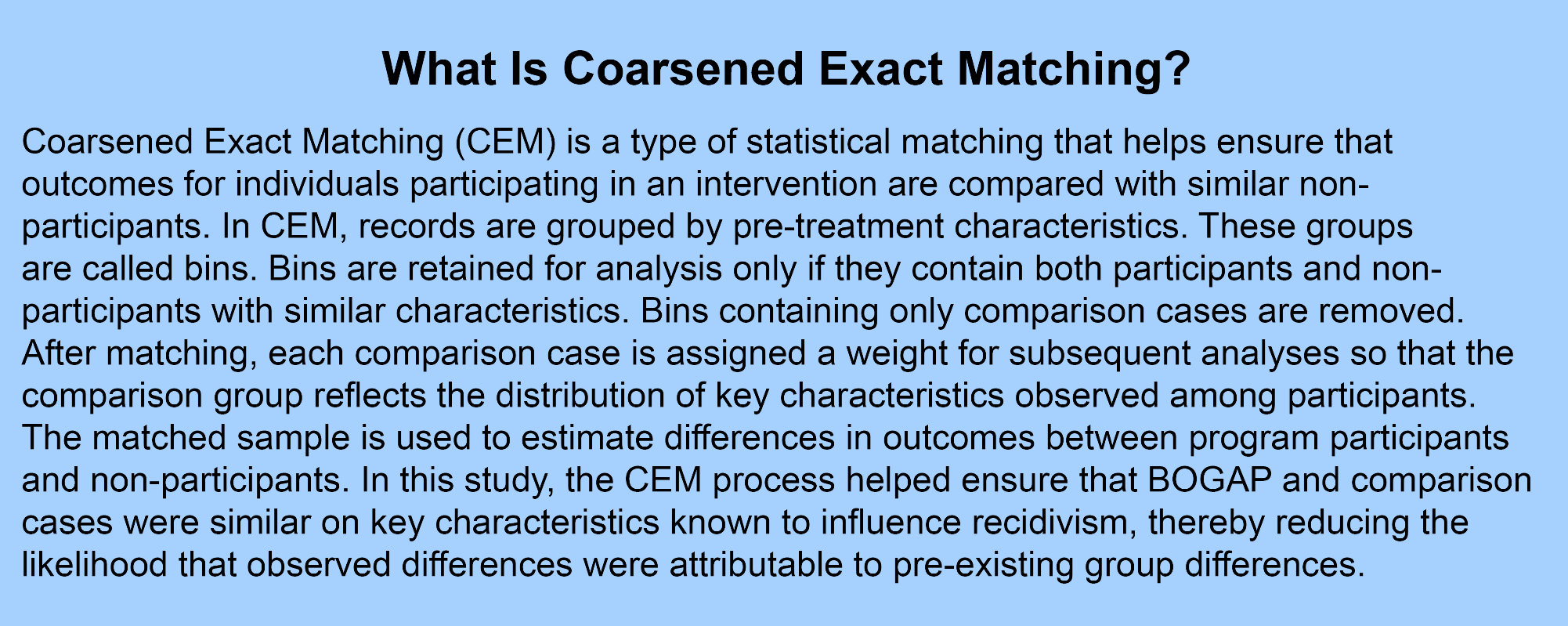
Researchers used Coarsened Exact Matching (CEM) to construct a comparison group similar to BOGAP participants on two key characteristics measured at the time of arrest: participant age and the class of arrest charge (severity type). The CEM matching process grouped treatment and comparison units by arrest and charge class into clusters, or strata in CEM terminology, and retained data bins that contained both treatment and comparison cases.
The matching model retained all 84 BOGAP participants and 4,987 comparison cases from the original pool of 5,428 comparison units. A total of 441 comparison cases were excluded because they did not fall within the region of common support, meaning they were not in the same bins as the treatment units. The procedure generated 18 strata, of which 8 contained both treatment and comparison cases and could be used in the analysis. Balance diagnostics indicated good covariate balance following matching, with a multivariate L1 imbalance statistic of 0.143 (lower values are preferred).4 Univariate imbalance measures were low for age at arrest (L1 = -0.0057), and arrest charge class was effectively balanced.
At face value, the rearrest rates for the treatment and comparison groups were 27 percent and 52 percent, respectively. These findings appeared favorable for BOGAP, but direct comparison of rearrest rates was inappropriate because participants had varying follow-up periods. For this reason, researchers conducted a survival analysis, which appropriately accounts for differences in follow-up time among individuals.
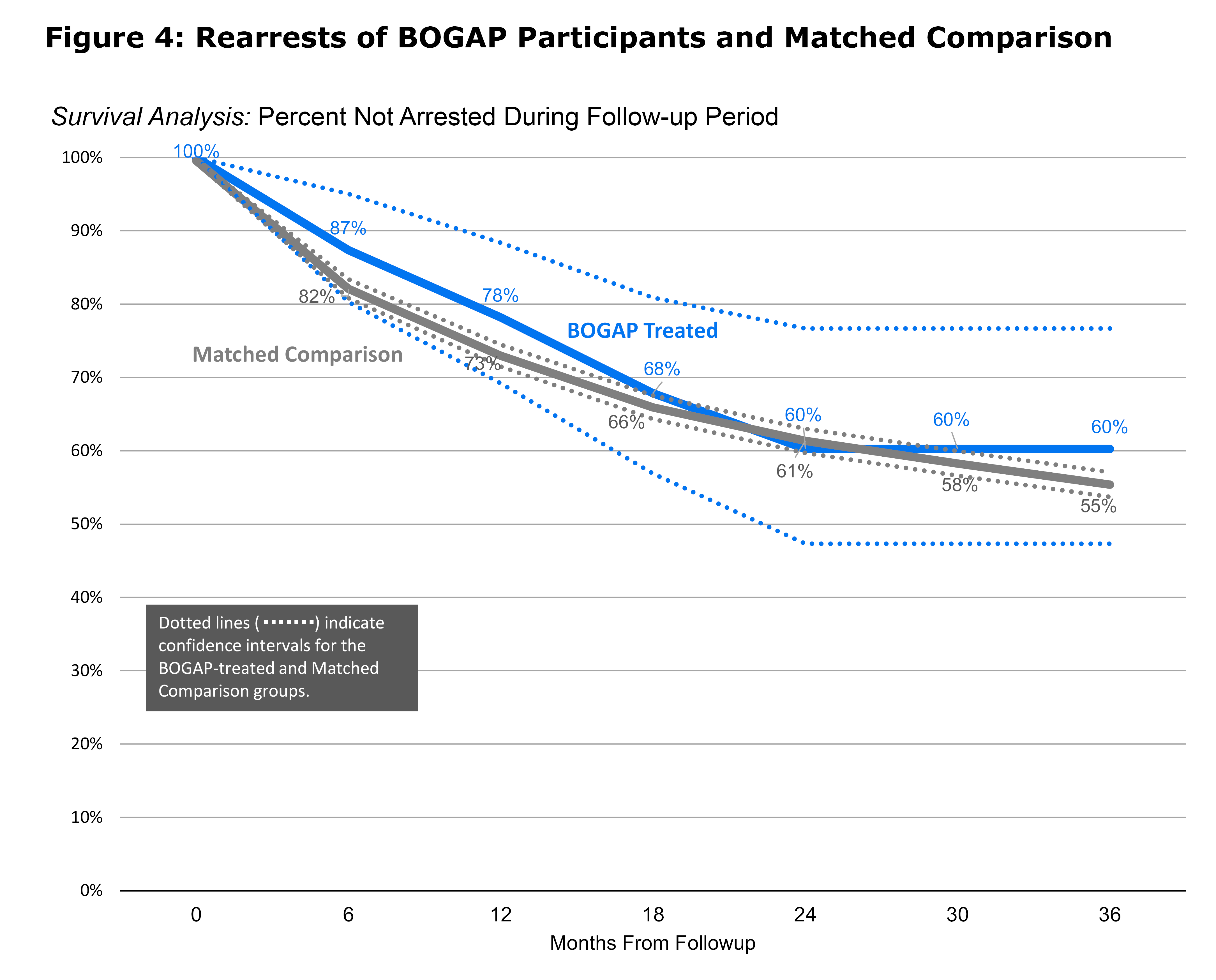
Using survival analysis, the study team estimated the timing of recidivism (Figure 4). Researchers used the Kaplan-Meier method to estimate the probability that a participant would remain arrest-free during the follow-up period. The study included multiple cohorts of participants with different entry and exit dates. Time zero was defined as the point when each individual exited the program, regardless of the calendar date. The results estimated the likelihood that participants remained arrest-free during specific periods following program exit (completion or graduation).
The survival analysis results suggest that BOGAP participants had a slightly lower risk of rearrest over time compared with a similar group of gun possession defendants not participating in BOGAP. The difference was small (about 6% lower) and not statistically significant. Based on the study’s survival charts and analysis estimates, the likelihood of a BOGAP participant remaining arrest-free 12 months after program exit was 78 percent, versus 73 percent for the comparison group. To evaluate whether the difference was statistically significant, researchers used a rigorous statistical procedure.
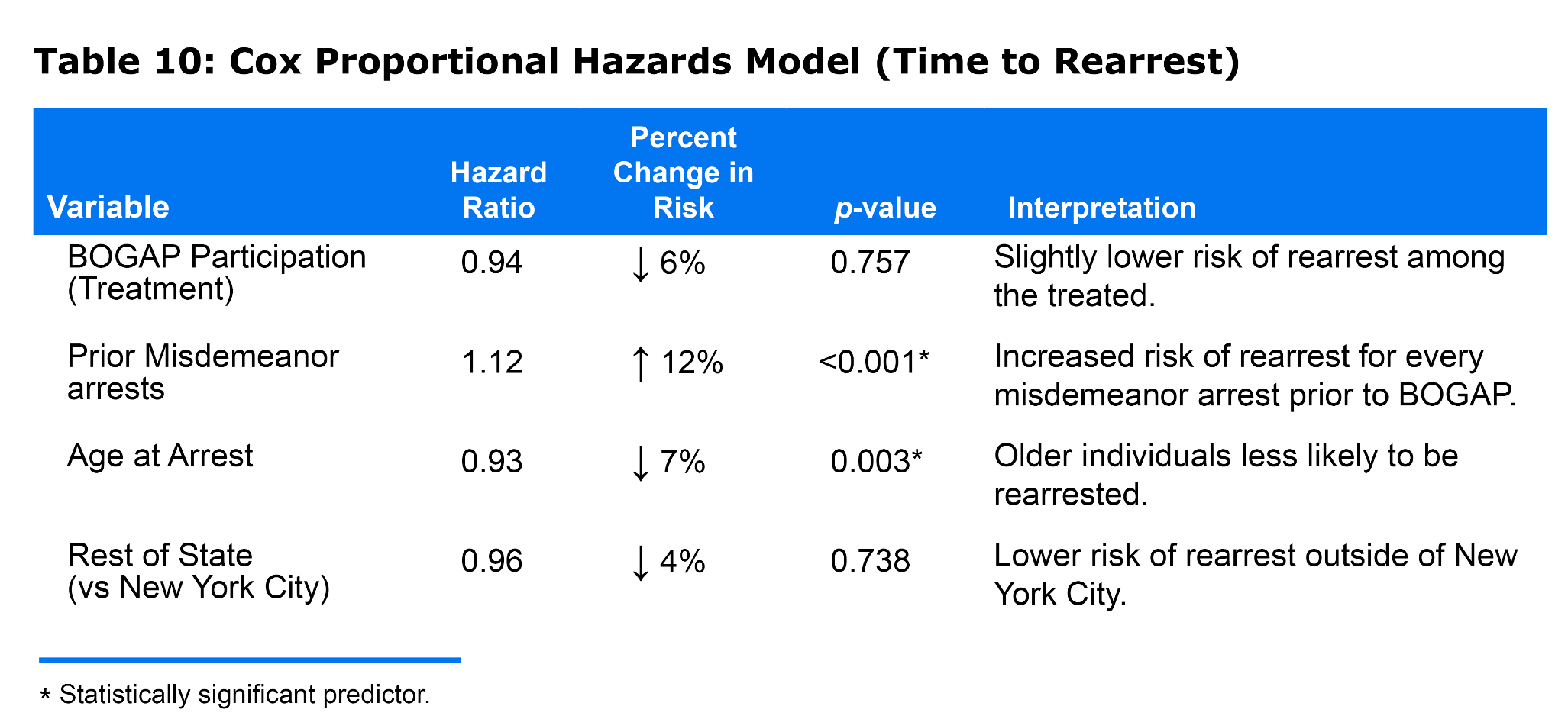
The research team estimated group differences using a Cox Proportional Hazards (PH) model. The analysis of rearrests accounted for other known predictors, such as age, prior criminal history, and region. Prior criminal history was the strongest predictor of rearrest (+12%). Individuals with more prior misdemeanor arrests in the pre-BOGAP period were more likely to be rearrested. The model assessed time to rearrest as a function of program participation (BOGAP or comparison) and other predictors, while accounting for variation in follow-up time and the ultimate censoring of follow-up among individuals not rearrested before the end of the study (January 15th, 2026).5
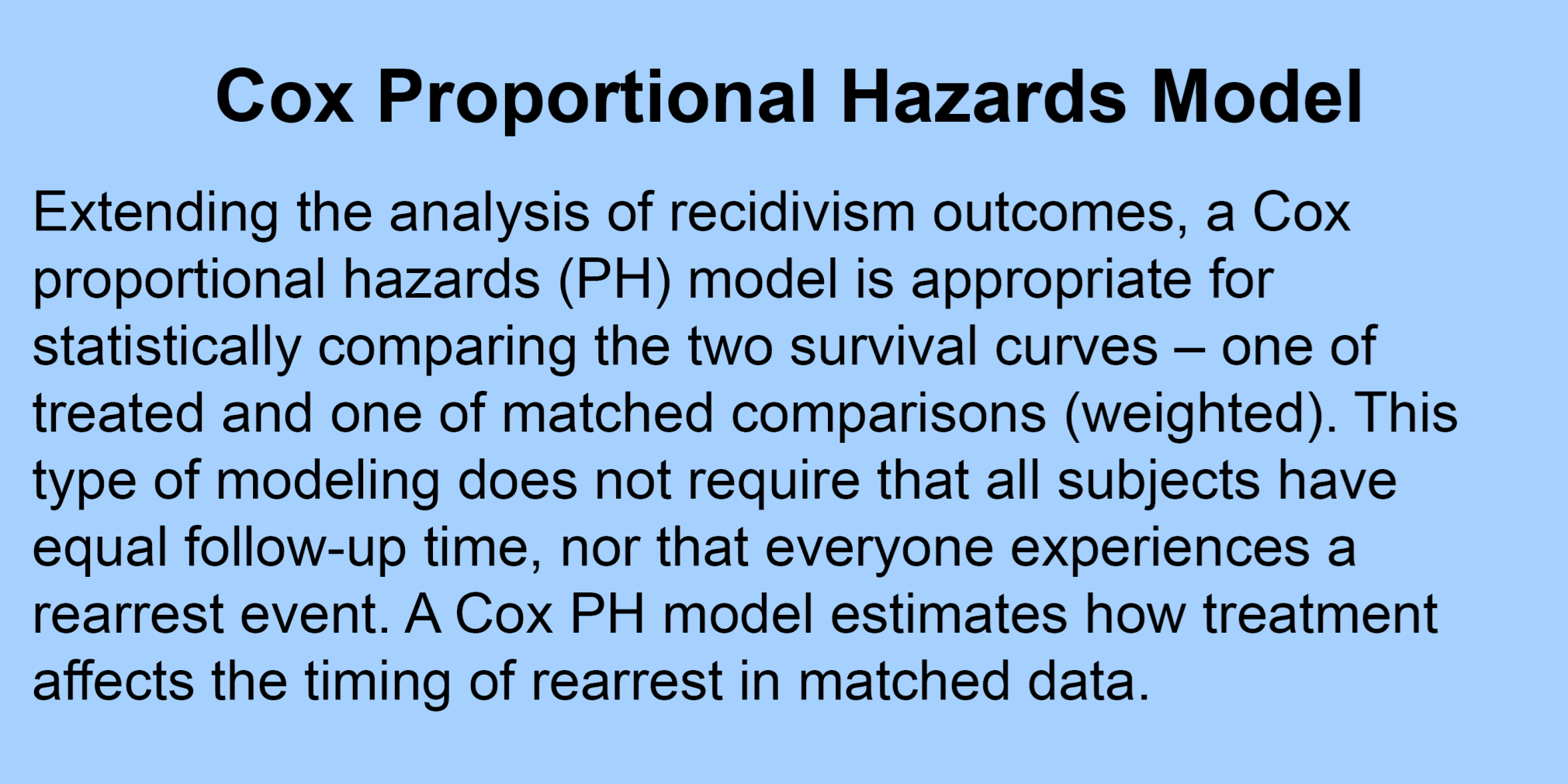
The Cox PH model showed no statistically significant difference in time to rearrest between program participants and matched comparison cases. The results also suggested a modest reduction in risk among participants (-6%). Prior criminal history was the strongest predictor of rearrest (+12%), followed by age and region. Older individuals were somewhat less likely to be rearrested (-7%), and those who lived outside NYC were less likely to be rearrested (-4%) (Table 10).
The study included a large overall sample (both treatment and comparison cases), but only 84 participants were in the treated group. In survival analysis, statistical power depends largely on the size of the smaller group (Hosmer et al. 2008). With only 84 treated individuals and few rearrests among them (i.e., 23), the study lacked the statistical power to detect effects. In plain terms, when one group has few rearrest events, it limits the ability to compare outcomes across groups with great precision, even if the total sample is large.
The results of the evaluation suggest that referring gun possession defendants to BOGAP does not add public safety risks for the Bronx community and could produce reduced risks of rearrest for those participating in the program. (For more details about the recidivism analysis, see Appendix J).
“[Y]oung people come into a program they’re mandated to attend, carrying past experiences that make them question whether they’ll be safe—not just physically, but psychologically and emotionally. At first, nobody knows each other, but as they engage in the program, they begin to relate to one another. They realize they have something important in common: they’re all trying to get through the program, succeed, and get their felony removed. We focus on that shared goal and on how they can empower each other moving forward.”
– BOGAP Staff Member
Future of BOGAP
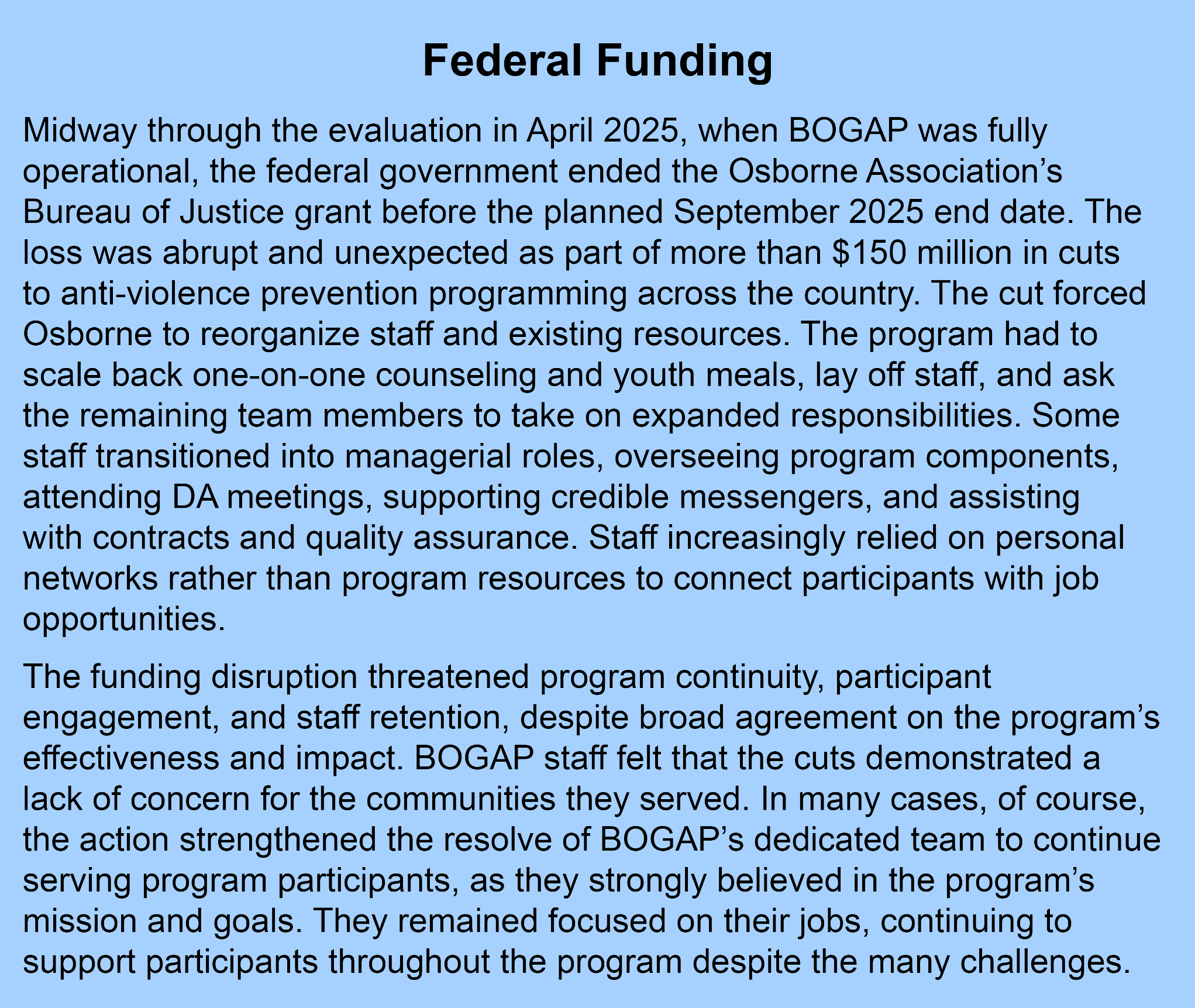
In early 2025, BOGAP lost a portion of its funding after the U.S. Department of Justice (DOJ) canceled more than $158 million in CVIPI (gun violence reduction) grants nationwide. The DOJ leadership was on record saying it intended to focus on prosecuting criminals, getting illegal drugs off the streets, and protecting Americans from violent crime, and that they reallocated discretionary funds for active awards that were “not aligned with the administration’s priorities.”
With nearly 30 percent of Bronx residents living in poverty, and one in six school children experiencing homelessness in any given year, Bronx residents relied heavily on investments in community-based programming to address a wide range of needs. Osborne’s CVIPI federal funding ended abruptly and earlier than planned, significantly reducing the resources available to meet the needs of participants and their community. Although funding from other sources allowed the program to continue operating, the loss of federal funding disrupted service delivery in a high-risk and high-need neighborhood, slowing the momentum the program had been building. Disinvestment from the federal government likely caused distrust among staff and participants, particularly in communities experiencing high levels of violence.
Staff from the Bronx DA and Osborne continued to display pride in the BOGAP program. Local stakeholders, including Bronx DA staff, emphasized the importance of sustaining and expanding its impact. The therapeutic, community-based model was frequently described as effectively addressing the population’s needs through relationship-building and accountability, rather than relying solely on punitive approaches. Some suggested that, if resources were available, the BOGAP model could be applied more broadly and could potentially contribute to long-term community safety, despite the financial challenges posed by the current environment. The funding cuts interrupted a growing effort in which experienced practitioners, community stakeholders, and credible messengers had been expanding their reach, professionalizing their work, and building more formalized community-based infrastructures.
Despite these challenges, voices from the Bronx DA’s office indicate continued institutional support and a longer-term shift toward diversion programs such as BOGAP. Osborne is piloting the BOGAP model in the Bronx with a younger population (ages 13 to 17), for example, with funding from the New York State Unified Court System. While BOGAP is not the only program available, the District Attorney’s office anticipates an increase in the number of cases participating in BOGAP and comparable initiatives. The office adopted this approach as a long-term strategy in some cases, viewing the program’s successes and the potential for further improvement as worth the investment to support community safety while remaining fair to individuals. They will likely continue to support Osborne in operating BOGAP, although they may not be able to provide ample funding for the program.
NEXT SECTION: DISCUSSION AND CONCLUSION
Footnotes
- Ordered logistic regression is used when outcome variables are ordinal (e.g., Likert scale). Models in this study estimated the likelihood of respondents reporting higher versus lower levels of outcomes while accounting for the ordered nature of the response categories, making it appropriate for analyzing survey-based attitude measures. Non-parametric tests (Kruskal–Wallis) are used to compare distributions across groups when outcome variables are ordinal and do not meet assumptions of normality required for parametric tests. The tests assess whether the distribution of responses differs across groups based on ranked data. [↩]
- Researchers considered multiple dates to determine the start of the tracking period for post-program justice involvement. While BOGAP’s potential impact on recidivism could be measured in various ways, tracking rearrest from the time of program exit was the closest method of isolating the effects of intervention. One limitation was that the end of the study limited exposure time for a portion of the treated sample. [↩]
- Of 23 BOGAP participants rearrested, one was an administrative exit and four were unsuccessful exits. Eighteen successfully exited the program. [↩]
- Researchers tested other matching approaches, particularly Propensity Score Matching (PSM). PSM yielded a small research sample, which substantially reduced statistical power. Coarsened Exact Matching (CEM) retained more comparable cases and was therefore used for the final analysis. [↩]
- The Top Charge file received from DCJS was extracted using a name search index that was last updated on April 15th, 2025 (the index is updated annually). Thus, new arrests under NYSIDs that existed prior to April 15, 2025 would be captured, but if someone’s NYSID (State ID) was sealed and they were rearrested under a new NYSID after April 15, 2025, the file would not reflect the new arrest. [↩]